
what is laminated safety glass
Types of Thread Gauges An Overview Thread gauges are essential tools in engineering and manufacturing that ensure precision and accuracy in threaded components. Their primary function is to measure the pitch, major diameter, minor diameter, and thread angle of threaded parts. Understanding the different types of thread gauges is crucial for those involved in industries such as manufacturing, automotive, and aerospace, where tolerance levels are stringently maintained. This article will delve into various types of thread gauges and their applications. 1. Go and No-Go Gauges One of the most basic forms of thread gauges is the Go and No-Go gauge. This type consists of two separate gauges the Go gauge, which represents the maximum allowable limits of a thread, and the No-Go gauge, which denotes the minimum allowable limits. When a threaded part passes the Go gauge but fails the No-Go gauge, it confirms that the part is within the specified tolerance range. This dual approach helps manufacturers quickly assess whether a part meets quality standards. 2. Thread Plug Gauges Thread plug gauges are cylindrical tools used to check the internal threads of parts, such as nuts or tapped holes. These gauges are available in both Go and No-Go styles. The Go end of the gauge should fit easily into the threaded hole, while the No-Go end should not fit. This ensures that internal threads are cut to the correct pitch and depth. 3 . Thread Ring Gauges Conversely, thread ring gauges are used to measure the external threads of parts, such as bolts and screws. Similar to thread plug gauges, they also come in Go and No-Go variants. The Go gauge checks the maximum limit of the external thread, while the No-Go gauge ensures that the thread does not exceed tolerance levels. These gauges are particularly important in applications where external threads must fit precisely into matching female threads. types of thread gauge 4. Thread Calipers Thread calipers are another type of thread gauge designed for more versatile applications. They can measure the pitch diameter of both internal and external threads. This tool is especially useful for assessing the uniformity and consistency of threads across a batch of threaded components. Unlike Go and No-Go gauges, thread calipers provide more detailed measurements, allowing for finer adjustments and quality control. 5. Pitch Gauges Pitch gauges are specialized tools used to measure the pitch of threads, which is the distance between one thread crest and the next. These gauges typically have various slots to accommodate different thread sizes and pitches. While they do not provide full measurements of the thread diameter or angle, they are invaluable for quickly identifying the pitch of a thread, aiding in selecting the appropriate tap or die for further machining processes. 6. Digital Thread Gauges With advancements in technology, digital thread gauges have emerged, providing a higher level of precision and ease of use. These gauges often come equipped with digital displays that show readings in real-time and can store multiple measurements for later reference. They are particularly advantageous for applications requiring frequent measurement and verification, improving efficiency in quality control processes. Conclusion The variety of thread gauges available is a testament to the importance of precision in manufacturing and engineering. From simple Go and No-Go gauges to advanced digital gauges, each type of thread gauge serves a specific purpose to ensure that threaded components meet the necessary specifications. Understanding these different types can significantly impact quality control and overall manufacturing efficiency, underscoring the importance of correctly calibrated and maintained thread gauges in any production setting.
about
what is laminated safety glass
Understanding 6G and 6H Thread Gauges Precision in Engineering In the world of engineering and manufacturing, thread gauges play a crucial role in ensuring the accuracy and functional integrity of threaded components. Among the various classifications of thread gauges, the 6G and 6H designations are particularly important, especially in applications involving tight tolerances and high-performance requirements. Understanding the differences between these two types of gauges is essential for engineers, manufacturers, and quality control specialists. What are Thread Gauges? Thread gauges are tools used to measure the size and pitch of threads on screws, bolts, and other fasteners. They come in various specifications to accommodate different types of threads, including Unified, Metric, and Whitworth threads. The accuracy of these gauges is critical, as even slight deviations can lead to assembly issues, product failures, or safety hazards. Introducing 6G and 6H Thread Gauges The distinction between 6G and 6H gauges mainly revolves around the tolerance classes they represent. In general, the “G” and “H” designation stands for General and Holding, respectively. 6g 6h thread gauges 1. 6G Thread Gauges The 6G tolerance class is often used for external threads, such as those found on bolts and studs. This class provides a medium level of tolerance, which allows for easy assembly while ensuring sufficient strength and reliability of the fastened joint. The 6G specification is characterized by a more significant allowance for variation, making it suitable for applications where parts may need to fit together while still accommodating some manufacturing error. 2. 6H Thread Gauges In contrast, the 6H class is designed for internal threads, such as those in nuts and tapped holes. The 6H tolerance is tighter than that of 6G, promoting a higher degree of precision. This class is particularly beneficial in applications where consistent performance is critical, and any slack in fit could lead to malfunction or decreased load-bearing capability. Applications and Importance Both 6G and 6H gauges are essential in industries ranging from aerospace to automotive manufacturing, where precision and reliability are paramount. The choice of gauge depends on the specific requirements of the application. Engineers often select 6G for general use, where some tolerance is acceptable, while 6H is favored in precision applications demanding greater control over dimensional accuracy. Conclusion In conclusion, the choice between 6G and 6H thread gauges can significantly impact the quality and performance of mechanical assemblies. Understanding their differences allows engineers to select the appropriate gauge for their specific application needs, ensuring both efficiency in production and reliability in the final product. In an era where precision engineering is more important than ever, mastering the subtleties of thread gauge specifications is essential for successful manufacturing practices.
-

High quality industrial productsagement

High quality industrial products
View Details -

Meet the diverse needs of customers

Meet the diverse needs of customers
View Details -

Strict quality control

Strict quality control
View Details -

Top raw materials

Top raw materials
View Details -

Trusted supplier

Trusted supplier
View Details
Our application

news and information
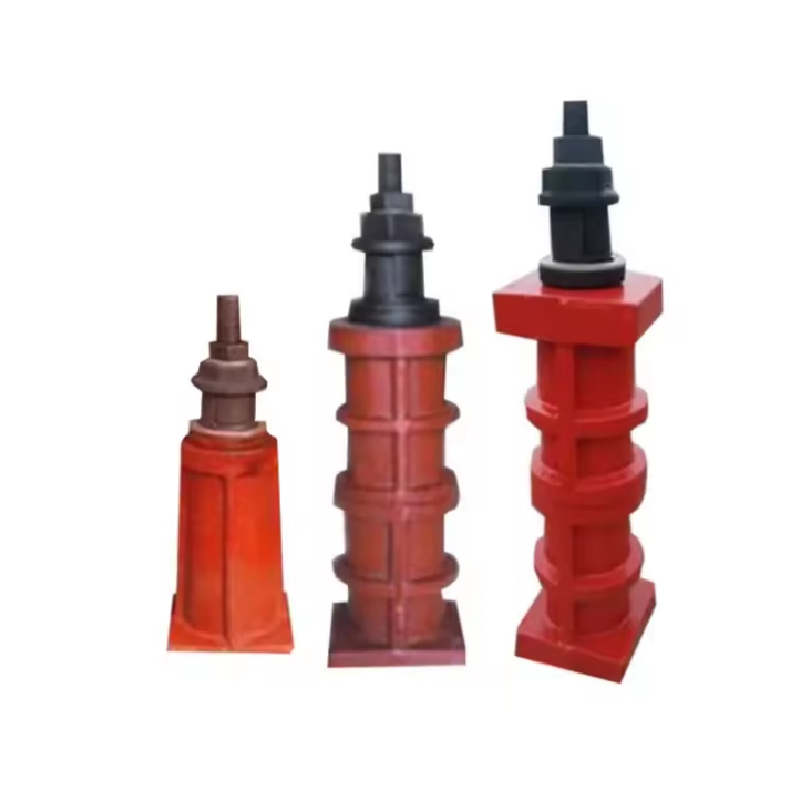
Wooden connectors for timber structures
The Indispensable Role of Wood Timber Connectors in Modern Construction Wood timber connectors play
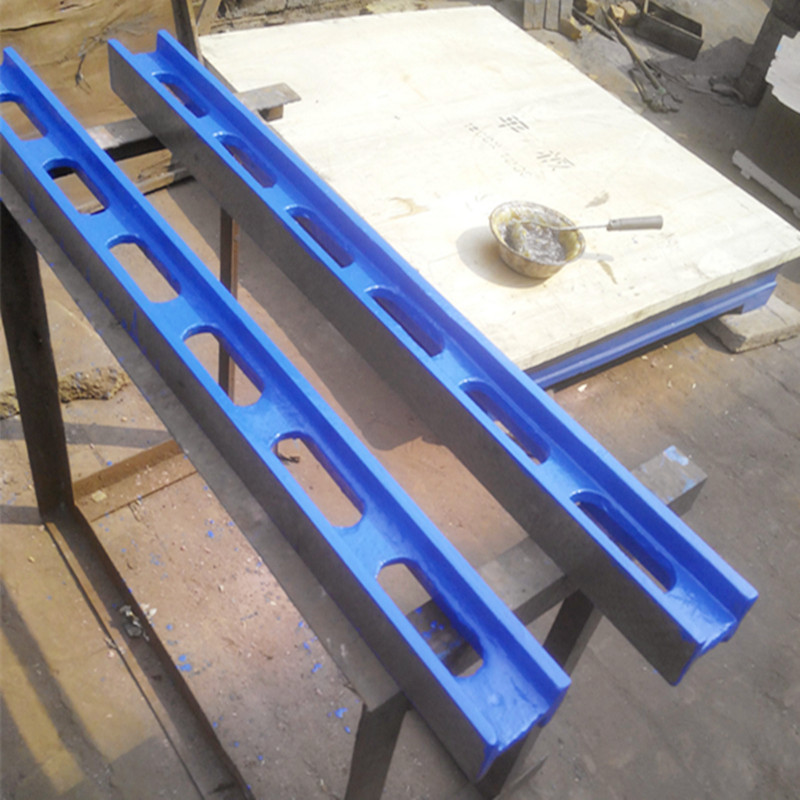
Van cầu Trung Quốc
Van cầu glob tại Trung Quốc Một cái nhìn tổng quan Van cầu glob là một loại van điều khiển lưu lượng
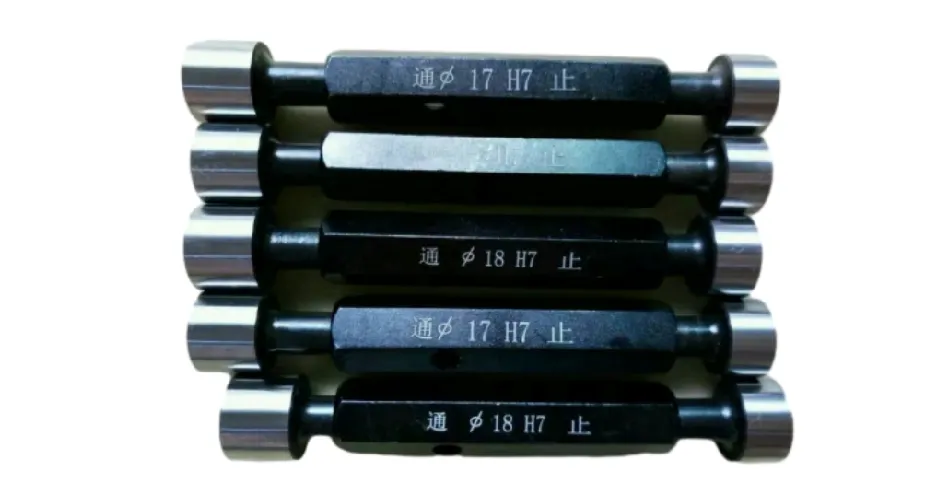
Using a Small Hole Gauge for Precision Measurement and Inspection of Small Orifices
The Importance of Small Hole Gauges in Measurement Small hole gauges are precision instruments used
 English